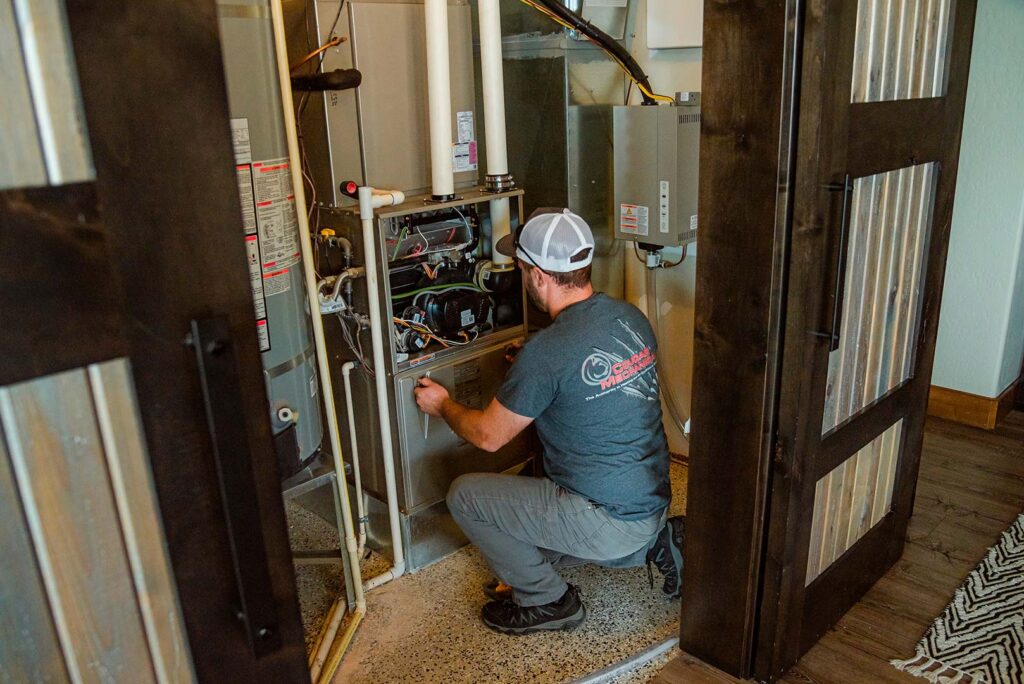
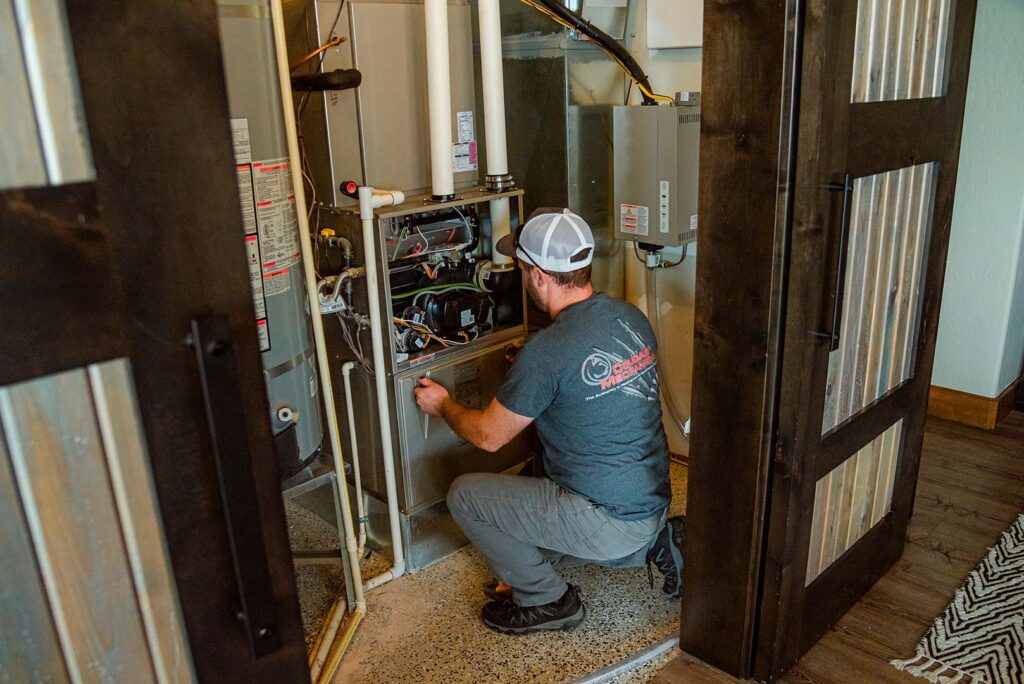
Static shocks, cracked lips and a scratchy throat every morning. In many Spokane homes, that is just how winter feels. It does not have to be. Cougar Heating, Cooling, Plumbing & Electrical helps homeowners across Spokane and North Idaho bring indoor humidity back to a comfortable level. The team installs whole house humidifiers for dry winter air and dehumidifiers for damp spaces. Humidity control is often the first step toward better indoor air.
Why Winter Air Gets So Dry
Cold air holds much less moisture than warm air. When your furnace or heat pump warms that cold air, the amount of water in it stays about the same. Its relative humidity drops, though, because warm air could hold far more water. That is why heated air feels so dry. Your heating system is not pulling water out of the air. It is warming air that was already dry.
Drafts make it worse. Cold outdoor air slips in around doors, windows and attic gaps. Your system warms that air, and the humidity drops again.
Common signs include:
- Static shocks when you touch a light switch, a doorknob or the dog
- Dry skin, chapped lips and dry nasal passages
- Small gaps in wood floors or trim as the wood shrinks
- A room that feels cooler than the thermostat setting
Humidifiers vs. Dehumidifiers
Both tools control humidity, but in opposite directions.
Whole House Humidifiers
A whole house humidifier connects to your HVAC system. It adds moisture to the air as the air moves through your ducts. Every room gets the benefit, not just the room with a tabletop unit.
Whole House Dehumidifiers
A dehumidifier does the reverse. It pulls extra moisture out of the air. It can help in basements, crawlspace homes and rooms that stay damp or smell musty. Some homes need more moisture in January and less during a damp spring.
Not sure which one your home needs? Indoor air quality testing is a smart place to start. A technician looks at how your home feels and how your system runs. Then you get clear options.
Installation Options
The right setup depends on your home, your heating system and the problem you want to solve. Common whole house options include:
- Bypass humidifiers, which use your furnace airflow and a small duct connection
- Fan-powered humidifiers, which add a built-in fan to move more moist air
- Steam humidifiers, which make steam and can add moisture even when the heat is not running
- Whole house dehumidifiers, which tie into your ductwork or serve one damp area
Your technician checks your equipment and ductwork first. Then the team explains which options fit your home. You get upfront pricing before any work begins.
Balance matters too. Too much moisture can fog windows and cause condensation. A humidistat lets you choose your level, and the system does the rest.
Humidity control also works well with other air quality upgrades. Many homeowners pair it with an air purification and filtration system to cut down on dust. Others add UV lights for the HVAC system to help keep the indoor coil cleaner.